Roofing Installation and Replacement in Madison
Professional roofing installation and replacement in Madison and surrounding areas. Family-owned, licensed & insured since 2008. Call (256) 771-0326.
A single missing shingle rarely causes an emergency on its own — but by the time you notice water staining on your ceiling or feel soft spots in your attic decking, the damage has usually been building for months. Roofing installation and replacement is the point where you stop patching over a failing system and commit to a roof that will actually protect the structure beneath it. Getting that transition right means more than swapping shingles; it means understanding what failed, why it failed, and how the new assembly should be built to last in North Alabama’s climate.
What roofing installation and replacement actually involves
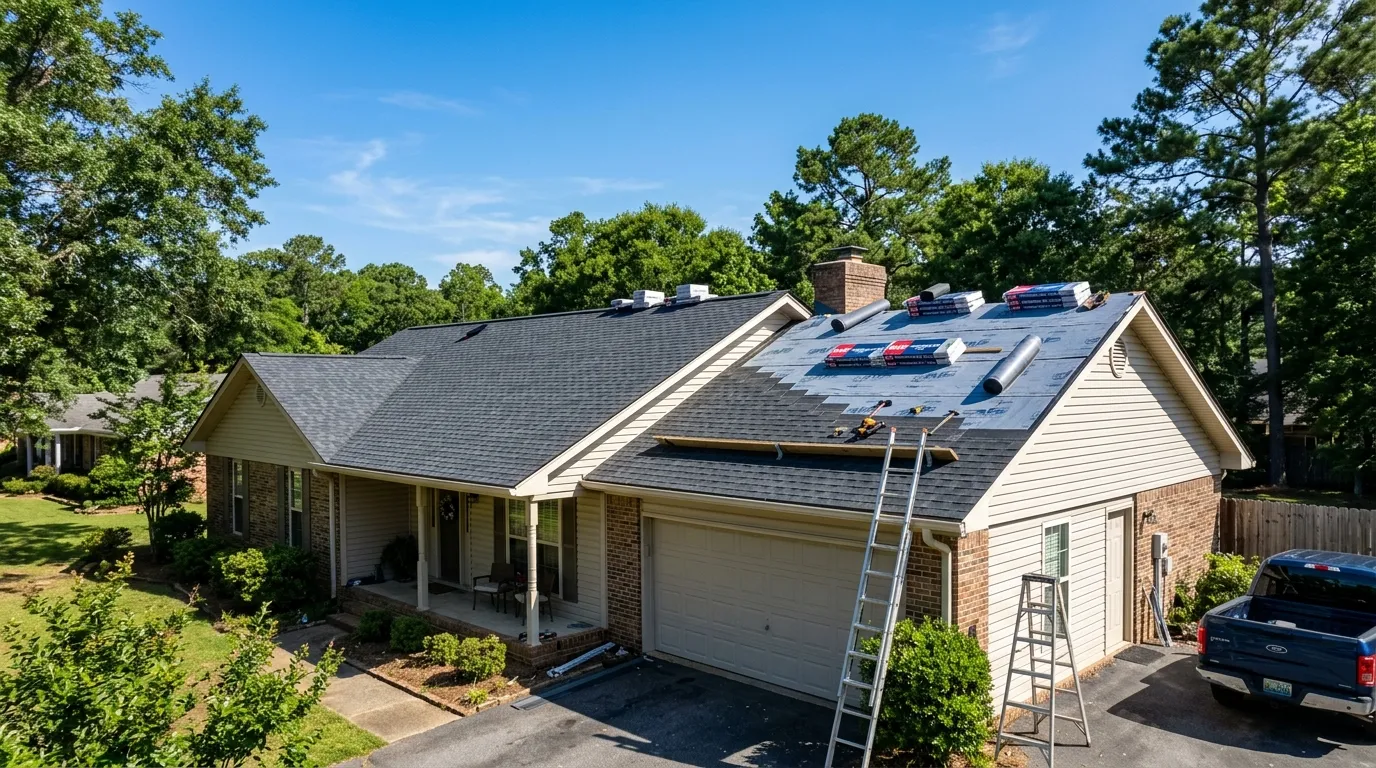
A full roof replacement starts well before the first nail gun fires. The existing roofing material — shingles, underlayment, and in many cases deteriorated flashing — comes off completely so the decking can be inspected in full daylight. Rotted or delaminated OSB or plywood sheathing gets replaced before anything new goes down. From there, a code-compliant underlayment system goes in, followed by ice-and-water shield at eaves, valleys, and penetrations, then the field underlayment across the rest of the deck.
Shingle installation follows manufacturer specifications for nail placement and overlap — details that directly affect wind-resistance ratings. Ridge cap, step flashing at walls and chimneys, and drip edge at rakes and eaves complete the weatherproof envelope. A new roof installation typically runs one to two days for a standard residential home, though larger footprints or steep pitches extend that timeline. Cleanup — magnet sweeps for nails, haul-away of old materials — is part of the job, not an afterthought.
Our process
-
Roof assessment and scope development. Before any materials are ordered, a technician walks the roof and the attic. We’re looking at shingle age and granule loss, decking condition, flashing integrity, soffit and ridge ventilation, and any signs of previous improper repairs. This inspection drives the material list and the project timeline — no surprises on day one.
-
Material selection and delivery staging. Shingle weight, color, and wind-resistance class matter for both performance and curb appeal. We source materials from established manufacturers and stage delivery so bundles aren’t sitting on the lawn for days before the crew arrives.
-
Full tear-off and deck preparation. Old roofing comes off in layers — shingles, felt, and any built-up patching. Every square foot of decking gets walked and probed. Soft spots, delamination, and areas with fastener pull-through get marked and replaced with matching-thickness sheathing before underlayment goes down.
-
Installation to manufacturer specifications. Underlayment, ice-and-water shield, shingles, and all metal components go in according to the manufacturer’s installation guide — which is also what keeps the product warranty valid. Nail pattern, exposure, and fastener type aren’t judgment calls; they’re documented requirements.
-
Final inspection and documentation. We walk the finished roof with the homeowner, photograph completed sections and flashing details, and provide documentation suitable for homeowner’s insurance records or future sale of the property.
What separates a good roof replacement from a bad one
The most common failure point in residential roofing isn’t the shingles — it’s everything underneath them. Contractors who skip full tear-offs and layer new shingles over old ones are hiding problems rather than solving them. Trapped moisture between layers accelerates decking rot, and most manufacturer warranties are voided by re-roofing over existing material.
Flashing is the second area where shortcuts show up years later. Step flashing at dormers and chimneys needs to be integrated with the shingle courses, not just caulked over. Counter-flashing on masonry chimneys requires proper reglet cuts or saddle flashing — a bead of sealant is not a substitute. Insurance adjusters reviewing storm damage claims look specifically at flashing condition to determine whether damage is storm-related or the result of deferred maintenance.
Ventilation is the third overlooked factor. An under-ventilated attic holds heat in summer, which degrades shingles from the underside and can void warranties. In winter, warm air escaping through an under-insulated ceiling creates ice dams at the eaves. A roof replacement is the right time to correct soffit-to-ridge ventilation ratios, not just replace the surface.
Seasonal and regional considerations
Madison and the surrounding Tennessee Valley sit in a climate zone that combines high summer humidity, occasional severe thunderstorm seasons, and ice events that arrive fast and melt fast — a combination that stresses roofing systems differently than either the Deep South or the Upper Midwest. Hail events in North Alabama tend to be localized, which means one street can have significant granule loss while the next block shows nothing. That makes post-storm inspections important even when your roof looks fine from the ground.
Summer heat in the region accelerates shingle aging, particularly on south- and west-facing slopes. Choosing shingles with higher solar reflectance can meaningfully extend service life and reduce attic cooling loads. Spring and fall are the most practical installation windows — temperatures in the 50–80°F range allow sealant strips to activate properly without the thermal expansion issues that come with midsummer installation on dark-colored shingles.
Service area
Davis Construction Contractors is based in Madison, AL and handles roofing installation and replacement throughout the surrounding region, including Huntsville, Athens, Decatur, Harvest, and Hampton Cove. Each city-specific page covers local permit requirements and neighborhood housing stock in more detail.
If your roof is showing signs of failure — granule loss in the gutters, daylight visible in the attic, shingles that lift at the corners in wind — the right next step is a documented inspection before the next storm season arrives. Call Davis Construction Contractors at (256) 771-0326 to schedule your roof assessment and get a written scope of work.
Frequently Asked Questions
How do I know whether I need a full roof replacement versus a repair?
What roofing materials perform best in North Alabama's climate?
Does a new roof installation require a permit in Madison, AL?
What warranty coverage should I expect on a new roof?
What documentation should I keep after a roof replacement for insurance purposes?
Looking for the best roofing installation and replacement company in Madison?
Davis Construction Contractors provides roofing installation and replacement in Madison, AL and the surrounding area, and has served local property owners since 2008. Call (256) 771-0326 during business hours (Monday–Friday, 8:00 AM – 5:00 PM) for a free estimate.
Need Roofing Installation and Replacement now?
We serve Madison and surrounding AL cities — family-owned, licensed & insured.