
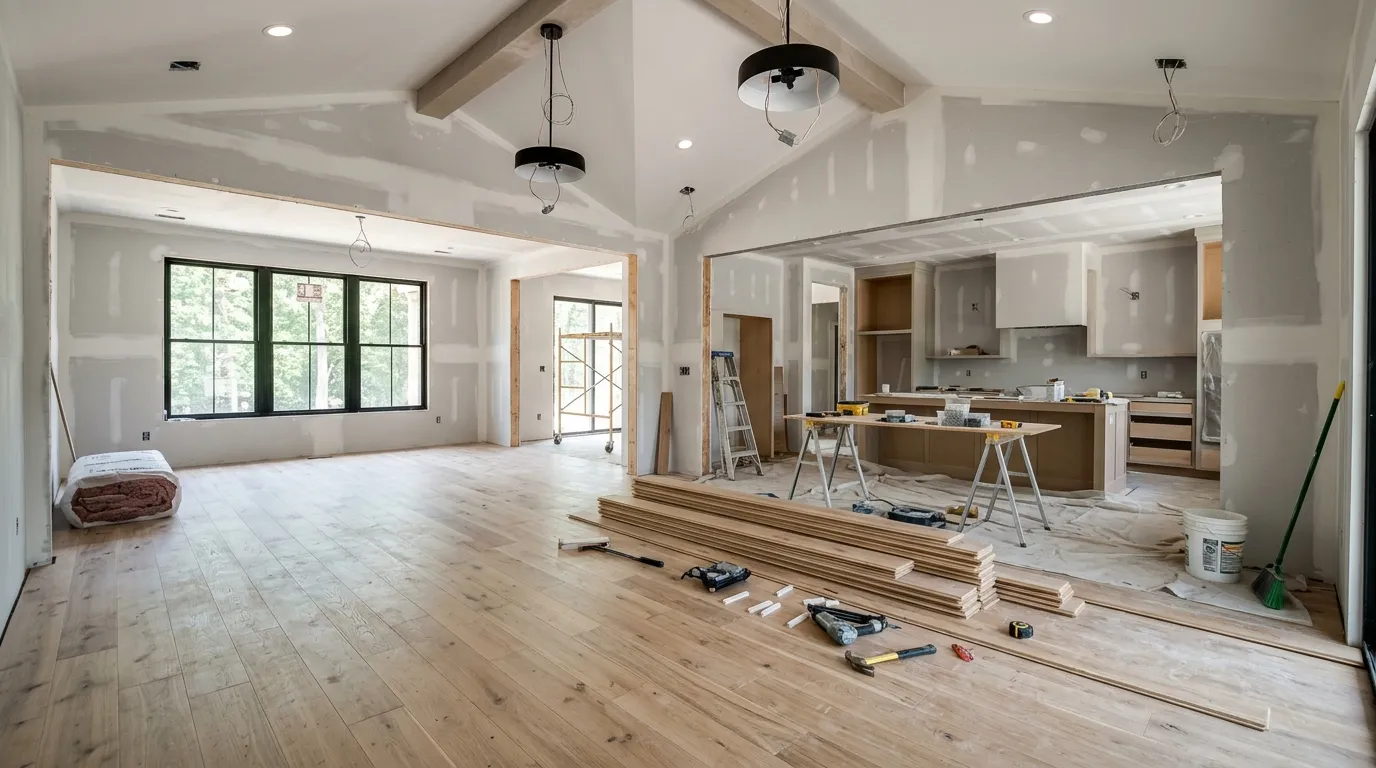
Home Remodeling in Madison
Professional home remodeling in Madison and surrounding areas. Family-owned, licensed & insured since 2008. Call (256) 771-0326.
Your kitchen still has the original oak cabinets from 1994. The master bath has a single vanity, a tub nobody uses, and a shower barely wide enough to turn around in. The living room and dining room are two separate boxes when you’d rather have one open space. These aren’t emergencies — but they’re the kind of friction that accumulates every single day, and a well-planned home remodel is the only thing that actually fixes them. Davis Construction Contractors handles that work from the first design conversation through the final coat of paint.
What home remodeling actually involves
A home renovation isn’t a single trade — it’s a sequence of trades that have to stay coordinated. A kitchen remodel typically touches demolition, rough electrical, rough plumbing, drywall, tile, cabinet installation, countertop templating and fabrication, appliance hookup, and finish carpentry, in that order, with inspections gating several of those transitions. A bathroom remodel adds waterproofing membranes and shower pan work to that list. A whole home remodel layers all of it across multiple rooms simultaneously, which means scheduling conflicts between subcontractors become the primary risk to your timeline.
Timelines vary by scope: a bathroom remodel runs 2–4 weeks for a straightforward gut-and-replace; a kitchen remodel typically runs 4–8 weeks depending on cabinet lead times; a whole home remodel can run 3–6 months. Material lead times — especially for custom cabinetry, specialty tile, and appliances — are often the longest variable, which is why procurement has to start before demolition, not after.
In Madison and the broader North Alabama region, older homes in neighborhoods like Harvest, Meridianville, and the established subdivisions closer to Research Park Boulevard frequently carry surprises behind the walls: galvanized supply lines, knob-and-tube wiring in additions, or undersized drain stacks that can’t handle a second bathroom. An experienced interior remodeling contractor accounts for those possibilities in the scope before work begins.
Our process
-
Design consultation and scope development. We walk the space with you, document existing conditions, and translate your priorities into a written scope of work with line-item detail. This is where we flag structural considerations, permit requirements, and lead times that will affect your schedule.
-
Permitting and pre-construction planning. Most kitchen and bathroom remodels in Madison require permits through the City of Madison Building Department or Madison County, depending on your address. We pull the permits, schedule the required inspections, and sequence the subcontractor schedule around those inspection windows — not the other way around.
-
Demolition and rough-in work. Selective demolition exposes the existing mechanical, electrical, and plumbing systems. This is the phase where hidden conditions get documented and priced before they become change orders mid-project. Rough-in work — moving a drain, adding a circuit, relocating a supply line — happens here, with inspections before walls close.
-
Finish installation. Tile, cabinetry, countertops, fixtures, flooring, and trim go in during this phase. The sequence matters: flooring before base trim, countertops before backsplash, fixtures after tile. Skipping or reversing steps costs rework time.
-
Final walkthrough and punch list. Before we close out the permit and call the project complete, we walk every finished surface with you, document anything that needs adjustment, and complete those items before final payment. The punch list isn’t an afterthought — it’s a scheduled phase.
What separates a good remodel from a bad one
The most common failure point in home renovation isn’t the finish work — it’s what happens before demolition starts. Contractors who skip detailed scope documentation leave themselves room to add change orders; contractors who don’t pull permits leave you with unpermitted work that surfaces at resale or during a refinance appraisal. In Alabama, unpermitted electrical or structural work can void a homeowner’s insurance policy on that portion of the home.
Waterproofing is the other area where corners get cut invisibly. A shower that leaks behind the tile won’t show damage for 12–18 months, by which point you’re looking at mold remediation and a full tile tear-out. Proper shower pan installation — whether a traditional mortar bed or a prefabricated foam system — requires sloped substrate, a liner that runs up the wall behind the backer board, and weep holes that stay clear. It’s not complicated, but it requires the right sequence and the right materials.
Finally, cabinet installation tolerances matter more than most homeowners realize. Out-of-plumb walls and out-of-level floors — common in homes built before the 1980s — require scribing and shimming to produce reveal lines that look intentional. Rushing that step produces gaps and misaligned doors that no amount of hardware adjustment will fully correct.
Seasonal and regional considerations
North Alabama’s humidity — regularly above 70% from May through September — affects finish materials in ways that matter during a remodel. Hardwood flooring needs to acclimate to the home’s interior humidity before installation; installing it straight off a delivery truck in August can produce gaps or cupping within a season. Paint and caulk cure times also extend in high humidity, which affects how quickly finish coats can follow primer.
Winter is generally the best time to schedule interior remodeling work in the Madison area: subcontractor availability is higher, material lead times from regional suppliers tend to be shorter, and the lower humidity supports faster finish curing. If your project has any exterior component — a door addition, a window expansion, or a bump-out — scheduling the exterior rough-in before the spring rain window closes is worth planning around.
Service area
Davis Construction Contractors is based in Madison, AL and handles home remodeling projects throughout the surrounding area, including Huntsville, Athens, Decatur, Harvest, Meridianville, and Madison County. City-specific pages cover local permit offices, typical housing stock, and neighborhood-level considerations for each area.
If you’re ready to stop working around a kitchen or bathroom that doesn’t fit how you actually live, call Davis Construction Contractors at (256) 771-0326 or reach out online to schedule your in-home design consultation and written scope of work.
Frequently Asked Questions
How do you handle surprises found during demolition — like outdated wiring or corroded plumbing — without the project budget spiraling?
Do I need permits for a kitchen or bathroom remodel in Madison, AL, and what happens if I skip them?
How long does a kitchen remodel typically take from demolition to final walkthrough?
What's the correct way to waterproof a tile shower, and how can I tell if it was done right in an existing bathroom?
Can a whole home remodel be phased, and how do you sequence phases to minimize disruption?
Looking for the best home remodeling company in Madison?
Davis Construction Contractors provides home remodeling in Madison, AL and the surrounding area, and has served local property owners since 2008. Call (256) 771-0326 during business hours (Monday–Friday, 8:00 AM – 5:00 PM) for a free estimate.
Need Home Remodeling now?
We serve Madison and surrounding AL cities — family-owned, licensed & insured.