
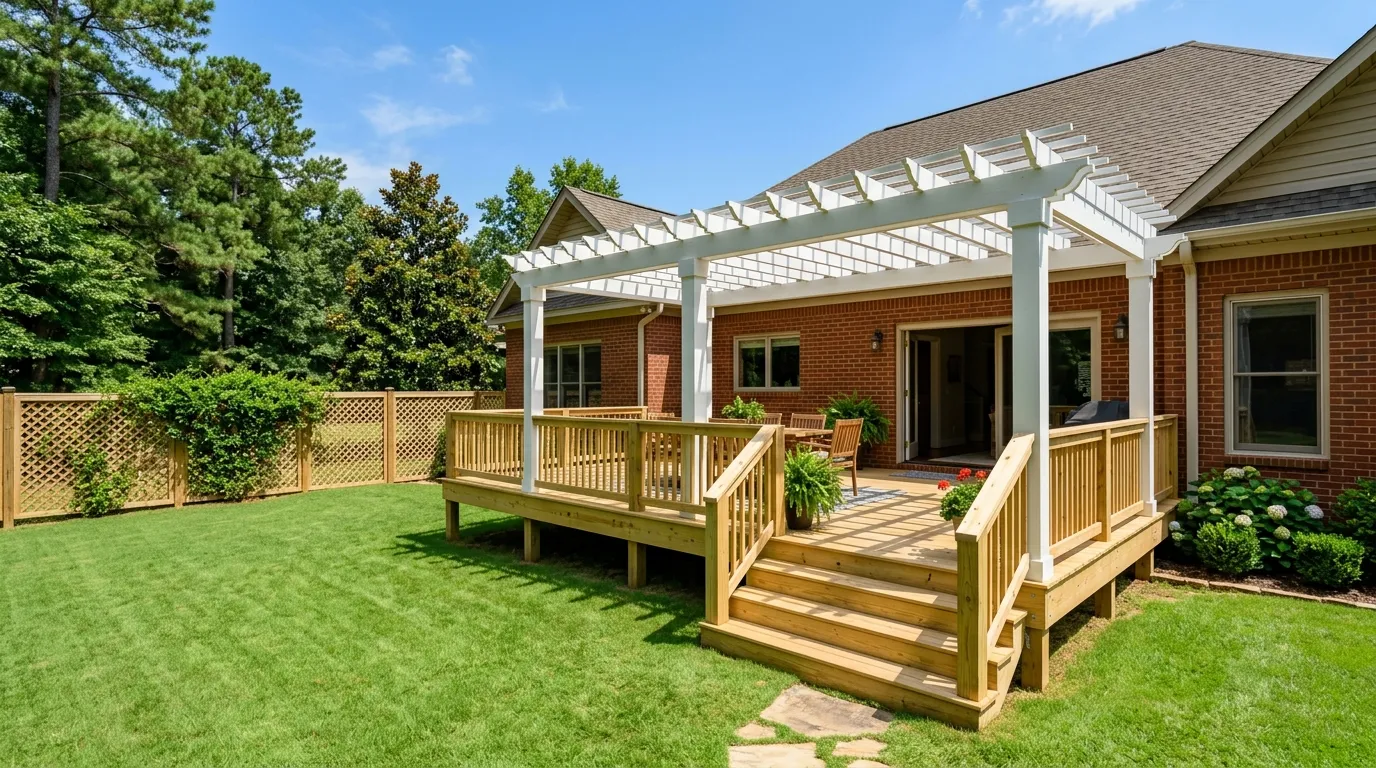
Decks, Pergolas and Fences in Madison
Professional decks, pergolas and fences in Madison and surrounding areas. Family-owned, licensed & insured since 2008. Call (256) 771-0326.
What Decks, Pergolas and Fences actually involves
You’ve got a backyard that stops at the back door. Maybe the concrete slab is cracking, the old pressure-treated deck has boards that flex underfoot, or there’s just open grass where a shaded pergola could turn that space into something you’d actually use. Building outdoor structures isn’t a weekend project — it’s a sequenced construction job that involves site grading, footing depth calculations, ledger attachment to the house framing, material selection that holds up against North Alabama’s humidity and summer heat, and finish work that still looks good in year five. A deck, pergola, or fence done right is an extension of the house. Done wrong, it’s a liability.
The work spans several disciplines: concrete footings and post anchoring, framing with pressure-treated lumber or composite materials, decking installation with proper gapping for drainage and expansion, pergola beam-and-rafter assembly, and fence post setting with the right depth and concrete collar to resist frost heave and wind load. Depending on scope, a deck project typically runs 1–3 weeks from permit approval to final inspection. A fence installation on a standard residential lot is usually 2–4 days. Pergolas vary widely — a freestanding 12×16 structure might take 3–5 days; an attached pergola with electrical rough-in for string lights or a ceiling fan takes longer.
Our process
-
Site assessment and design consultation. We walk the yard with you, note grade changes, identify underground utilities, measure the footprint, and discuss materials — composite vs. pressure-treated lumber, cedar, vinyl, aluminum, or wood fencing. We flag anything that will affect permitting: proximity to property lines, attachment to the house, or structures over a certain square footage that trigger Madison city permit requirements.
-
Permitting and material procurement. We pull the permit, handle the drawings if required, and order materials. We don’t start digging until the permit is in hand. Material lead times vary — some composite decking products run 1–2 weeks out — so we sequence this early.
-
Footing and framing. Post holes are dug to the correct depth for the load and soil type. Concrete footings are poured and allowed to cure before any framing load is applied. Ledger boards are flashed and bolted directly to the house rim joist — not toe-nailed to siding. Framing is squared, leveled, and braced before decking or roofing begins.
-
Decking, roofing, or fencing installation. Deck boards are installed with consistent spacing for drainage. Pergola rafters and beams are set, notched where required, and fastened with structural hardware — not just screws. Fence panels or pickets are hung plumb and level, with gates hung on heavy-duty hardware sized for the gate weight.
-
Final inspection and walkthrough. We schedule the city inspection, address any corrections on the spot, and walk the finished structure with you — checking railings for code-compliant height and balusters, gate latches, and any electrical or lighting rough-in that was part of the scope.
What separates a good build from a bad one
The most common failure points in deck and pergola construction aren’t visible until something goes wrong. Ledger attachment is the most critical: a ledger bolted through the rim joist with proper flashing and standoffs prevents water infiltration behind the board — the leading cause of rim joist rot that can compromise the house structure itself. Contractors who skip the flashing or use the wrong fastener pattern create a slow-motion water damage problem that doesn’t show up for two or three years.
Footing depth matters more than most homeowners realize. Madison sits in a climate where hard freezes do occur — footings that don’t extend below the frost line will heave and shift, racking the structure above them. Post bases set in concrete without proper drainage can wick moisture and rot the post from the bottom up, invisible until the post fails.
For fences, the mistakes are usually in post spacing and concrete collars. Overspanning between posts creates a fence that waves in wind and sags at the gates within a season. Setting posts in solid concrete without drainage at the base traps water and accelerates rot in wood posts.
On pergola builds, undersized beam and rafter stock is the common shortcut. A pergola that looks fine on paper but uses undersized lumber will deflect noticeably under a load of climbing plants or a polycarbonate roof panel — and that deflection doesn’t reverse.
Seasonal and regional considerations
North Alabama’s climate creates specific timing and material considerations. The combination of hot, humid summers and occasional hard freezes means wood species selection matters: ground-contact pressure-treated lumber rated for direct burial, not just above-ground use, is the right call for posts. Composite decking expands and contracts more than wood in the temperature swings between January and August — gapping requirements are different than they are for pressure-treated boards, and installers who don’t account for that end up with buckled decking by midsummer.
Spring is the busiest build season in Madison, and permit offices reflect that — plan for longer review times from March through May. If you’re planning a project for summer entertaining, a late-winter consultation gives enough lead time for permitting and material procurement without rushing the build.
Service area
Davis Construction Contractors is based in Madison, AL and builds decks, pergolas, and fences throughout the surrounding area — including Huntsville, Athens, Harvest, Meridianville, and other communities across Madison and Limestone counties. Each city-specific page covers local permit offices, typical lot configurations, and neighborhood-specific considerations.
If your backyard is ready to become something you actually use, call Davis Construction Contractors at (256) 771-0326 to schedule a site visit and design consultation. We’ll walk the space with you, talk through materials and budget, and give you a written scope before any work begins.
Frequently Asked Questions
Do I need a permit to build a deck or pergola in Madison, AL, and who pulls it?
What's the difference between composite and pressure-treated lumber for decking, and which holds up better in Alabama's climate?
How deep do fence and deck posts need to be set in Madison-area soil?
What structural hardware is required for a pergola, and why does it matter?
How is a ledger board properly attached to a house, and what goes wrong when it isn't done correctly?
Looking for the best decks, pergolas and fences company in Madison?
Davis Construction Contractors provides decks, pergolas and fences in Madison, AL and the surrounding area, and has served local property owners since 2008. Call (256) 771-0326 during business hours (Monday–Friday, 8:00 AM – 5:00 PM) for a free estimate.
Need Decks, Pergolas and Fences now?
We serve Madison and surrounding AL cities — family-owned, licensed & insured.